
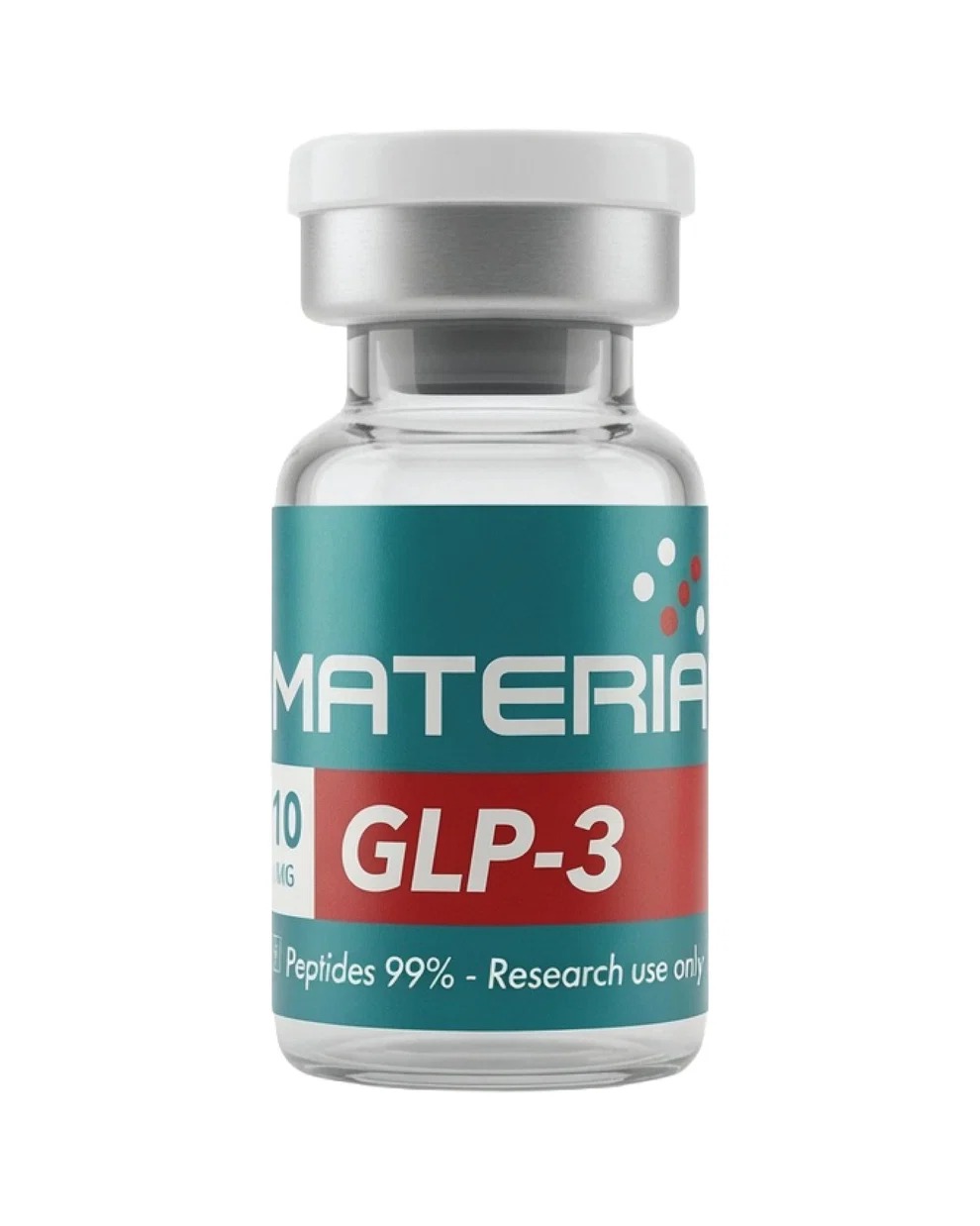
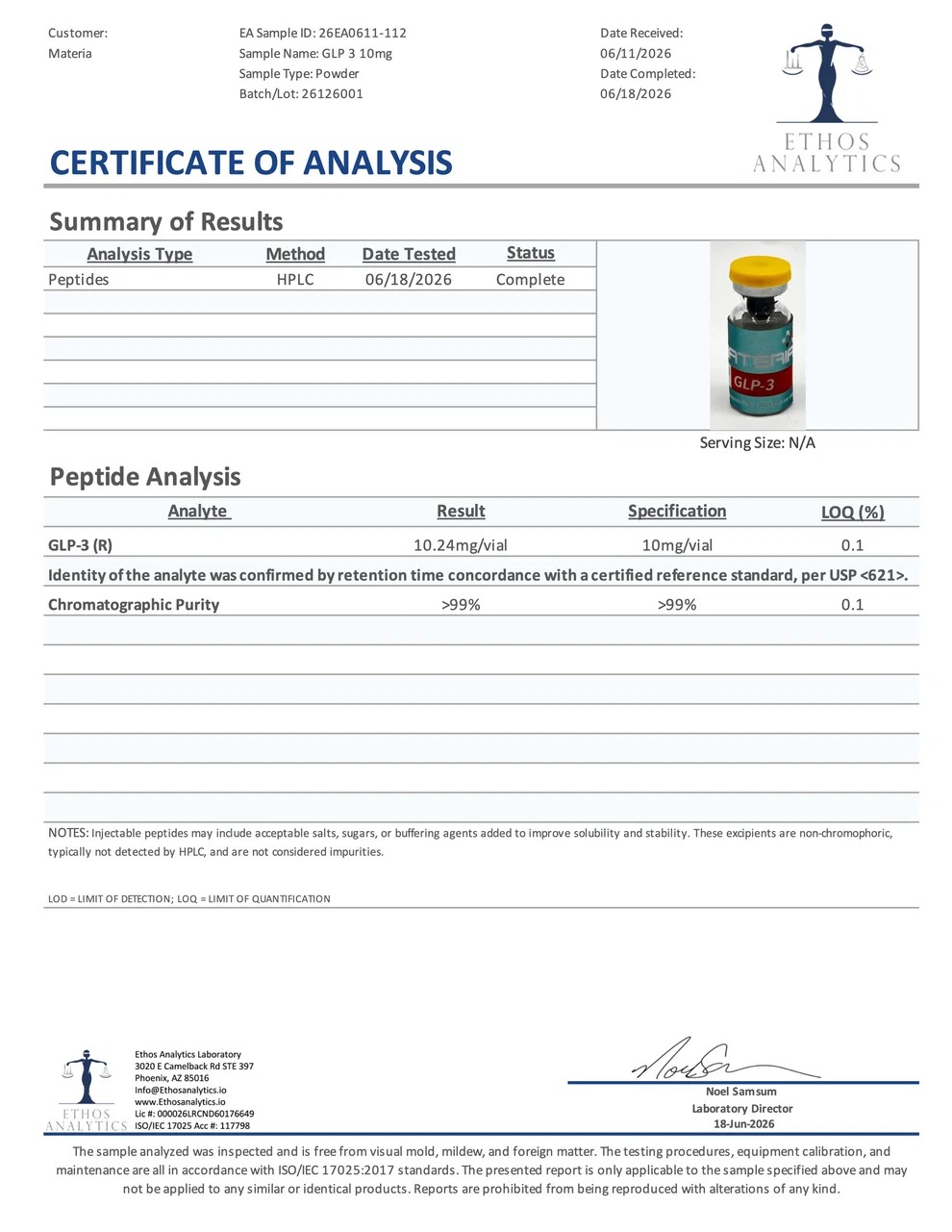
Third-party tested for 99% purity, ID, quantity.
Third-party tested for endotoxins
Synthetic lipidated peptide. Reference material for in vitro laboratory research use only.
| CAS | 2381089-83-2 |
| Sequence | Published renderings are inconsistent; see lot Certificate of Analysis |
| Molecular formula | C221H342N46O68 |
| Molecular weight | 4731.33 g/mol |
| Net content | 10 mg per vial (gross fill; actual content per lot COA) |
| Form | Lyophilized powder |
| Storage | ?80 °C for long-term; ?20 °C sealed, dry, protected from light, under inert gas |
| Note | Published sequence renderings are inconsistent; identity per lot COA. |
| Testing | Identity and purity verified by third-party HPLC analysis; a lot-specific Certificate of Analysis is provided with each order. |
Research Use Only. Not a drug, supplement, or food. Not for human or veterinary use. Not intended to diagnose, treat, cure, or prevent any disease.
GLP-3 has been investigated for its interactions with three major metabolic receptors: GLP-1R, GIPR, and GCGR. Experimental and clinical research has examined how simultaneous engagement of these pathways may influence metabolic signaling, energy regulation, glucose-related processes, and broader physiological pathway dynamics.
Key Areas of Research:
Together, these findings make GLP-3 a notable compound for investigating coordinated receptor signaling across multiple metabolic pathways. Its triple-agonist profile provides a research framework for studying how GLP-1, GIP, and glucagon receptor systems interact and contribute to broader pathway dynamics within controlled experimental settings.
Coskun T. et al., Cell Metabolism, 2022Coskun T. et al. (2022). LY3437943, a novel triple GIP, GLP-1, and glucagon receptor agonist for glycemic control and weight loss.
Jastreboff AM. et al. (2023). Triple-Hormone-Receptor Agonist Retatrutide for Obesity — A Phase 2 Trial.
Sanyal AJ. et al. (2024). Triple hormone receptor agonist retatrutide for metabolic dysfunction-associated steatotic liver disease: a randomized phase 2a trial.
MedChemExpress — Retatrutide (LY3437943). Compound identity, CAS number, molecular formula, molecular weight, and receptor activity data.
GLP-3 Research Material — Identity and Research Context. Published research identity and reference information for CAS 2381089-83-2.STEP 1
Precision Lyophilization
Manufactured in a controlled U.S. facility under strict compounding standards.
STEP 2
Verified Purity
Every batch third-party tested with HPLC and mass spectrometry.
STEP 3
Same-Day Fulfillment
Orders dispatched same-day from our
U.S. facility.
STEP 1
Precision Lyophilization
Manufactured in a controlled U.S. facility under strict compounding standards.
STEP 2
Verified Purity
Every batch third-party tested with HPLC and mass spectrometry.
STEP 3
Same-Day Fulfillment
Orders dispatched same-day from our
U.S. facility.
Everything you need to know about our products and processes.
Each vial contains exactly what’s shown on the label. For example, a 10mg vial has exactly 10mg of lyophilized peptide. Researchers can divide it into smaller portions—like four 2.5mg measurements—but the total amount remains 10mg.